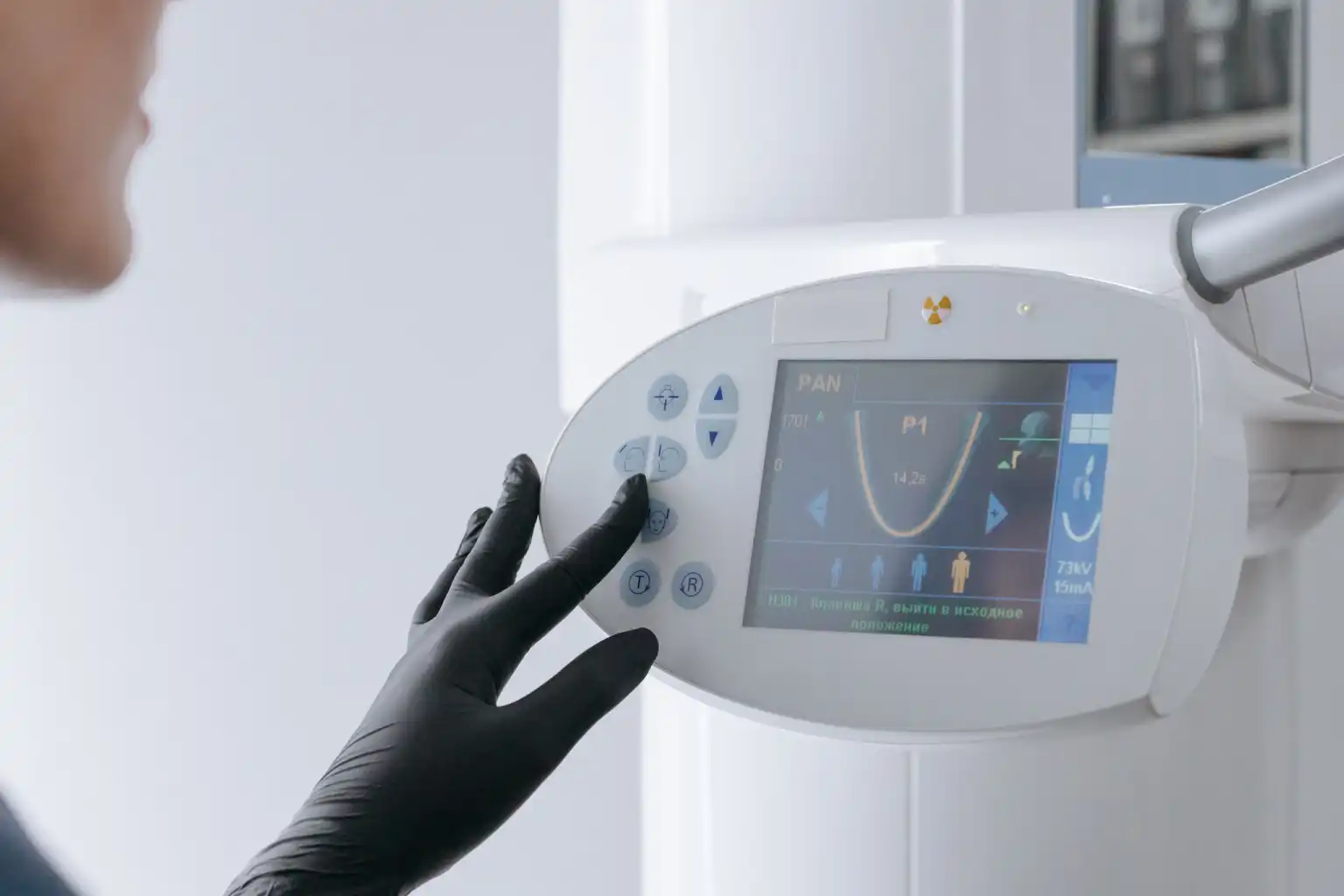
Dr. Moqattash reviewing a 3D dental scan on screen with a patient at Finesse Dental

Finesse Dental · Rancho Cucamonga

Our Technology

Better pictures mean fewer surprises — for you and for us.

Most of what goes wrong in a mouth starts somewhere you cannot see it. The equipment on this page exists to find those places early, show them to you on a screen, and keep visits shorter than they used to be.

  • Cone-beam 3D imaging and digital X-ray on site
  • iTero digital scanning instead of impression putty
  • You see what we see, on the screen, in the room

Questions about imaging or whether you need new X-rays? Call (909) 852-6787 and ask before you book.

Rancho Cucamonga, Alta Loma, Upland and Ontario · caring for RC since 2004

Cone-beam 3D imagingA full view of bone, nerve and sinus
Digital X-rayLess radiation than traditional film
iTero digital scannerNo impression trays, no putty
Intra-oral cameraYou see the same close-up we do

Why it matters

Equipment is only useful if it changes the decision

Dr. Alexander Moqattash has kept the practice current since 2004, and the test he applies is simple: does this let us find something sooner, explain it better, or treat it with less disruption? Everything below passes that test. Nothing here is bought to look impressive in a brochure.
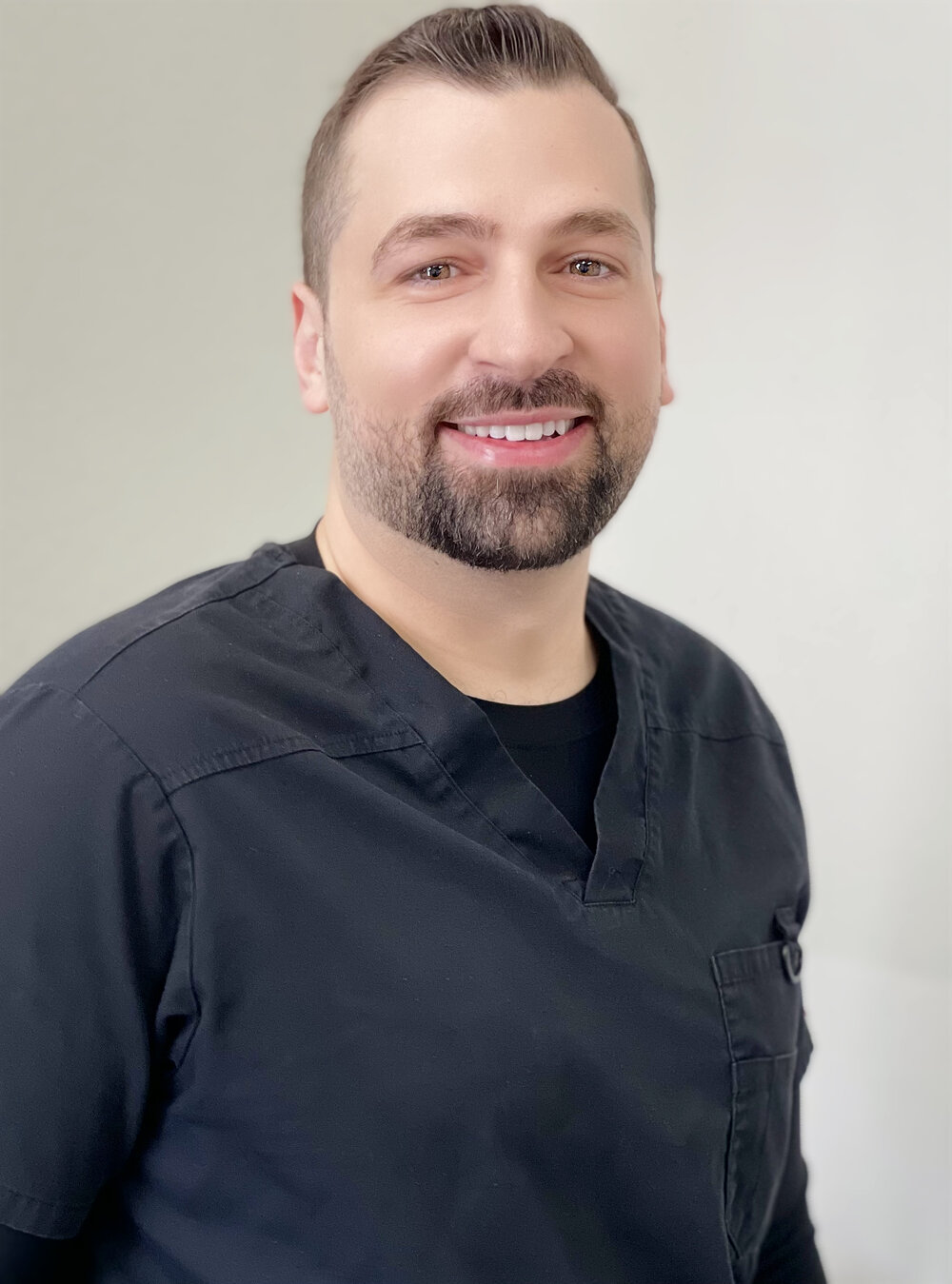
Dr. Alexander Moqattash of Finesse Dental
Dr. Alexander MoqattashDDS · New York University College of Dentistry

What we use

The equipment, and what each one is actually for

Six pieces of kit. Here is what each one does, in plain terms, and what it changes about your visit.

Intra-oral cameraA pen-sized camera that photographs a tooth close up and puts it on the screen beside you. It picks up cracks and stress lines that are invisible to the naked eye — and, just as usefully, it means you are looking at the same picture we are when we explain what we found.
Digital X-rayDigital sensors produce a detailed image with less radiation than traditional film, and it appears on the screen in seconds rather than being developed. Most decay starts between teeth or under an old filling, which is exactly where an X-ray looks and your eyes cannot.
Cone-beam 3D imagingA CT-style scan that shows the jaw in three dimensions instead of one flat view — bone height and width, the path of the nerve, the sinus, the true shape of a root. It is what turns implant and difficult extraction planning from an estimate into a measurement.
Soft tissue laserLight energy used for small adjustments to gum and soft tissue, in place of a scalpel. It is the tool behind gum contouring, and it is often used to expose enough of a tooth to restore it properly.
Hard tissue laserA laser that can work on tooth structure itself. For some cavities it is an alternative to the drill, with less of the vibration and pressure that most people actually dislike about a filling. Not every case suits it, and we will tell you when yours does not.
iTero digital scannerA handheld scanner that builds a 3D model of your teeth from photographs, then sends it to the lab electronically. No trays, no putty, no gagging — which matters more than it sounds if impressions are the part of dentistry you dread.

If you have had recent X-rays at another practice, ask them to send the files over. Good imaging is worth having, but taking it twice is not.

The honest version

What we will and will not tell you about radiation

People ask about radiation more than any other question on this page, and it deserves a straight answer rather than reassurance.

Digital X-ray uses less radiation than the film it replaced. That part is simple. Cone-beam 3D imaging is different: it uses more radiation than a standard dental X-ray, and far less than a medical CT scan. It is not a routine picture and we do not take one just because we have the machine. It gets used when the extra information genuinely changes the plan — implant placement, a root with unusual anatomy, a difficult extraction near the nerve.

The other half of the answer is that imaging is taken based on what you need, not on a fixed schedule. If you have had recent films elsewhere, we would rather use those.

What to expect at your first visit

How we decide on imaging

  • Based on your own history and risk, not a fixed calendar
  • Recent images from another office used where we can
  • Cone-beam only when the extra detail changes the treatment
  • We tell you what we are taking and why, before we take it
  • Every image is shown to you and explained, not just filed
  • You can ask for copies of your own images at any time

In the room

How this fits into an actual visit

  1. We ask what you already have

    Recent X-rays from another practice can often be used. Tell us at booking and we will request them rather than repeating them.

  2. Images if they are needed

    Usually digital X-rays. We say what we are taking and why before we take anything.

  3. A look with the camera

    Anything worth discussing gets photographed close up, so the conversation happens over a picture rather than a description.

  4. 3D only where it earns its place

    If the case involves an implant, a complicated root or an extraction near the nerve, a cone-beam scan is worth the extra detail. Otherwise it is not taken.

  5. We go through it on screen

    You see the images, we point at what we are seeing, and you can ask what any of it means. This is the part the equipment is really for.

  6. The plan comes out of the pictures

    What is urgent, what can be watched, and what each option involves — all based on something you have seen for yourself.

Book an Appointment

Common questions

Questions about imaging and equipment

Do I really need X-rays?

Often, yes — most decay starts between teeth or beneath an existing filling, where it cannot be seen or felt until it is much bigger. But images are taken based on your own history and risk rather than a fixed schedule, and if you have had recent ones elsewhere we would rather use those.

How much radiation is involved?

Digital X-ray uses less radiation than the traditional film it replaced. Cone-beam 3D imaging uses more than a standard dental X-ray and considerably less than a medical CT scan — which is why we only take one when the extra detail will change the treatment plan.

Can I use X-rays from my previous dentist?

Very often. Ask your previous office to send them across before your appointment. If they are recent and complete we may not need to take new ones at all.

Does the laser hurt?

The soft tissue laser is used for small gum adjustments and most people find it straightforward. The hard tissue laser can treat some cavities with less of the vibration and pressure people dislike about a drill, but it does not suit every case and we will say so when it does not. We are not going to promise you that any dental treatment is painless.

I gag on impressions. Is the scanner better?

Usually, yes, and this is the most common reason people are pleased about it. The iTero scanner photographs your teeth rather than pressing a tray of material against them, so there is nothing sitting in your mouth setting.

Can I see my own images?

Yes. We show them to you in the room as a matter of course, and you can ask for copies of your own records at any time.

Do you charge extra for 3D imaging?

Imaging is billed as its own item and what you pay depends on your plan. Ask us before it is taken — you should know what something costs before it happens, not after.

Does new equipment mean my visits cost more?

Not in the way people expect. Better images mostly save money, by finding a problem while it is still a filling rather than a crown, and by planning treatment properly the first time instead of reworking it.

Cost & insurance

What imaging means for your bill

X-rays and scans are billed as separate items from the exam, and most dental plans cover routine diagnostic imaging at a reasonable rate — though plans usually limit how often. Cone-beam imaging is treated differently by different plans, which is exactly why we tell you before we take one.

Call with your plan name and member ID and we will check where you stand before your appointment. If you do not have insurance, ask what the imaging comes to and you will have the number in advance.

Insurance, CareCredit and payment options

How we handle it

  • We tell you what imaging is needed and why, before taking it
  • Preferred Provider (PPO) for many dental insurance companies
  • Children’s Medicaid accepted
  • CareCredit available for larger treatment plans
  • Recent images from another office used wherever possible
  • Costs discussed before treatment is scheduled
Ask About Cost

See the equipment for yourself in Rancho Cucamonga

Finesse Dental · 8906 San Bernardino Rd, Suite 130
Rancho Cucamonga, CA 91730
Get directions