Finesse Dental · Rancho Cucamonga
Cosmetic bonding in Rancho Cucamonga
That chipped front tooth,
often sorted in one visit.
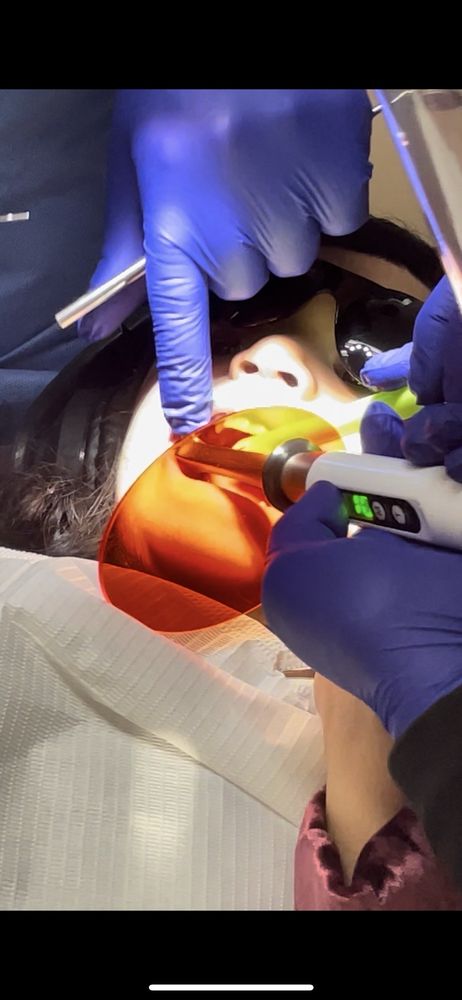
Tooth-colored composite shaped directly onto the tooth and polished to blend in. It is the conservative option for chips, small gaps and worn edges — usually removing little or no tooth structure, which is what sets it apart from veneers.
- Often a single appointment
- Color-matched to your own teeth
Chipped a front tooth? Call and describe it — we will tell you what is likely involved.
Rancho Cucamonga, Alta Loma, Upland and Ontario · caring for RC since 2004
Why people choose bonding
It keeps your
options open.
Veneers and crowns involve permanently reshaping the tooth. Bonding usually does not — in most cases little or no enamel is removed, which means you have not closed off other routes later. It is also quicker and costs less. The trade-off is that composite is softer than porcelain: it stains more over time and is more prone to chipping. For the right case that trade is well worth making, and we will tell you honestly when it is not.
Reviews
What our patients say
Patient experiences, shared on Google.



Let’s look at that chip or gap.
Tell us what you’d like to change. Our team can check availability and explain whether bonding suits it.
What bonding handles well
Small things that
bother you daily.
These are the everyday repairs bonding is built for — and they are more common than people assume.
Not sure whether bonding is enough for what is bothering you? That is exactly the kind of thing worth a short conversation rather than a guess. Tell us what you would like to change and we will talk through the options.
Options & suitability
Bonding, veneers,
or leave it alone.
All three are reasonable answers depending on what you are dealing with.
Bonding suits single chips, small gaps, minor reshaping and localized repairs — especially when you would rather not have tooth structure removed.
Veneers make more sense when several teeth need changing at once, when color will not respond to anything else, or when you want the better long-term resistance to staining that porcelain gives.
Sometimes the answer is neither. If a chip is tiny and not causing you trouble, polishing the edge may be all it needs. We are happy to say that.
All cosmetic optionsThe honest trade-offs
- Composite stains over time in a way porcelain does not.
- It can chip, particularly on biting edges or if you grind.
- It will need maintenance, repair or replacement at some point.
- Matching a single tooth precisely is skilled work and not always exact.
- Composite does not lighten with whitening — whiten first if you plan to.
Related treatments
If bonding
is not the fit.
These come up most often when we talk through the alternatives.
Cost & payment
What does
bonding cost?
It depends on how many teeth, and how much shaping each needs. Bonding generally sits below veneers, which is part of why it is worth discussing first.
Cosmetic treatment is elective, so most dental plans do not cover it. We will tell you which parts of a plan might qualify rather than assuming either way, and CareCredit is available if you would rather spread the cost.
Payment & CareCredit informationStraightforward and explained
- Cost explained before we begin, not after.
- Generally less than porcelain veneers for the same tooth.
- Repairs to existing bonding are usually simpler than starting over.
- CareCredit available for larger cosmetic plans.
Also on Yelp
More patient reviews
More experiences from people who chose Finesse Dental.













Tell us what you’d like to change.
Finesse Dental · 8906 San Bernardino Rd, Suite 130Rancho Cucamonga, CA 91730Get directions