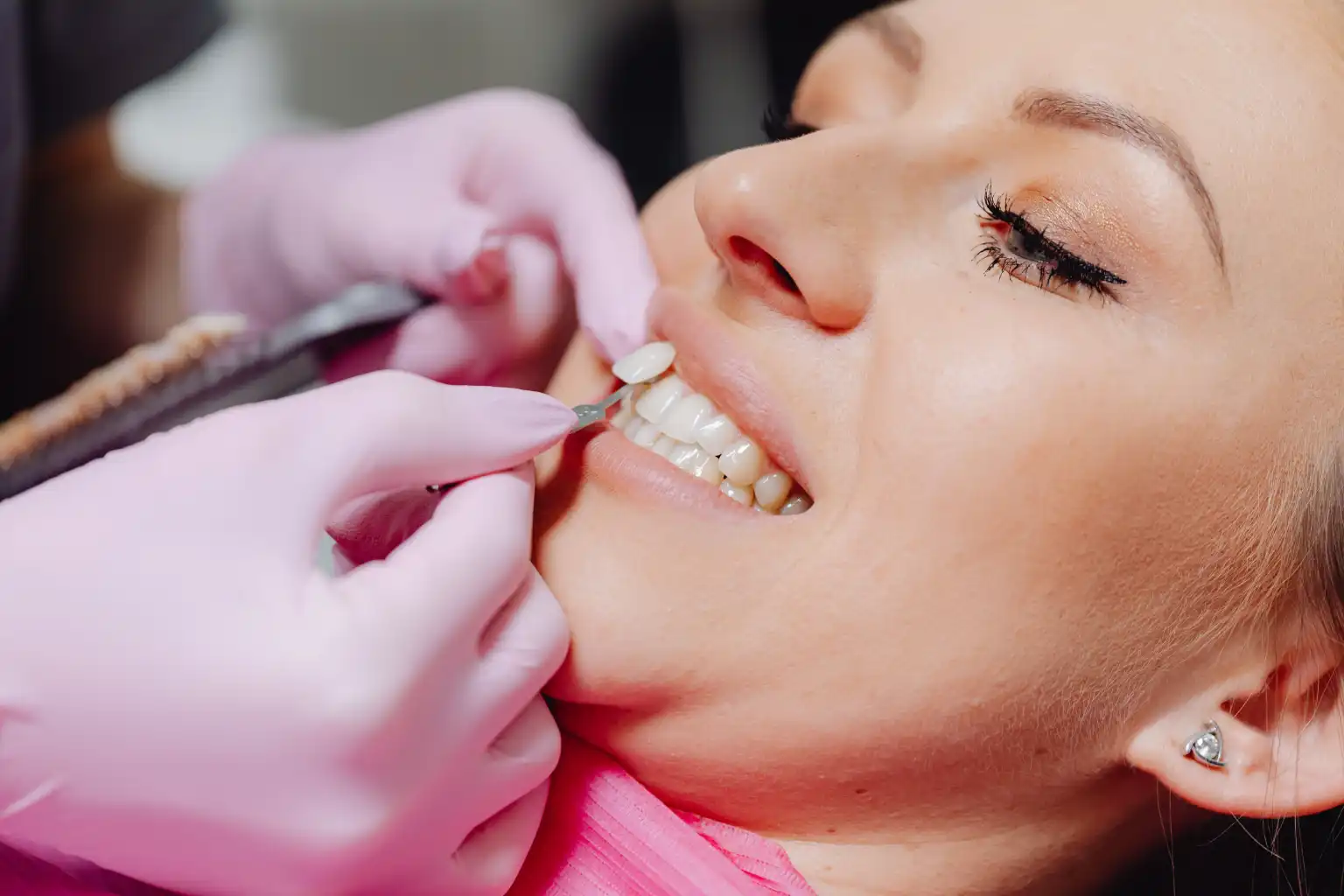
A close-up of a natural-looking smile after porcelain veneer treatment

Finesse Dental · Rancho Cucamonga

Porcelain veneers in Rancho Cucamonga

Planned around your face.
Not around a catalog.

Thin porcelain shells bonded to the front of your teeth, changing shape, color and the appearance of alignment together. One tooth or a full row. We plan the shade and proportion against your features, and we are straight with you about what veneers permanently change.

  • Shade checked in daylight
  • Digital planning before anything is prepared

Want to know if veneers are the right answer, or overkill? Ask us — we will tell you.

Rancho Cucamonga, Alta Loma, Upland and Ontario · caring for RC since 2004

One dentist, start to finishDr. Moqattash plans and places the work
Digital planning firstSee the proposal before anything is prepared
Shade checked in daylightOffice lighting flatters. Daylight does not.
Costs in writing firstCareCredit available

The part worth understanding

Veneers are
not reversible.

To seat porcelain without the tooth looking bulky, a thin layer of enamel is usually removed first. That enamel does not grow back, and the teeth will need a veneer or crown from then on. This is not a reason to avoid veneers — it is a reason to be certain before starting. We will show you what is involved for your teeth specifically, and if something more conservative would get you most of the way there, we will say so.
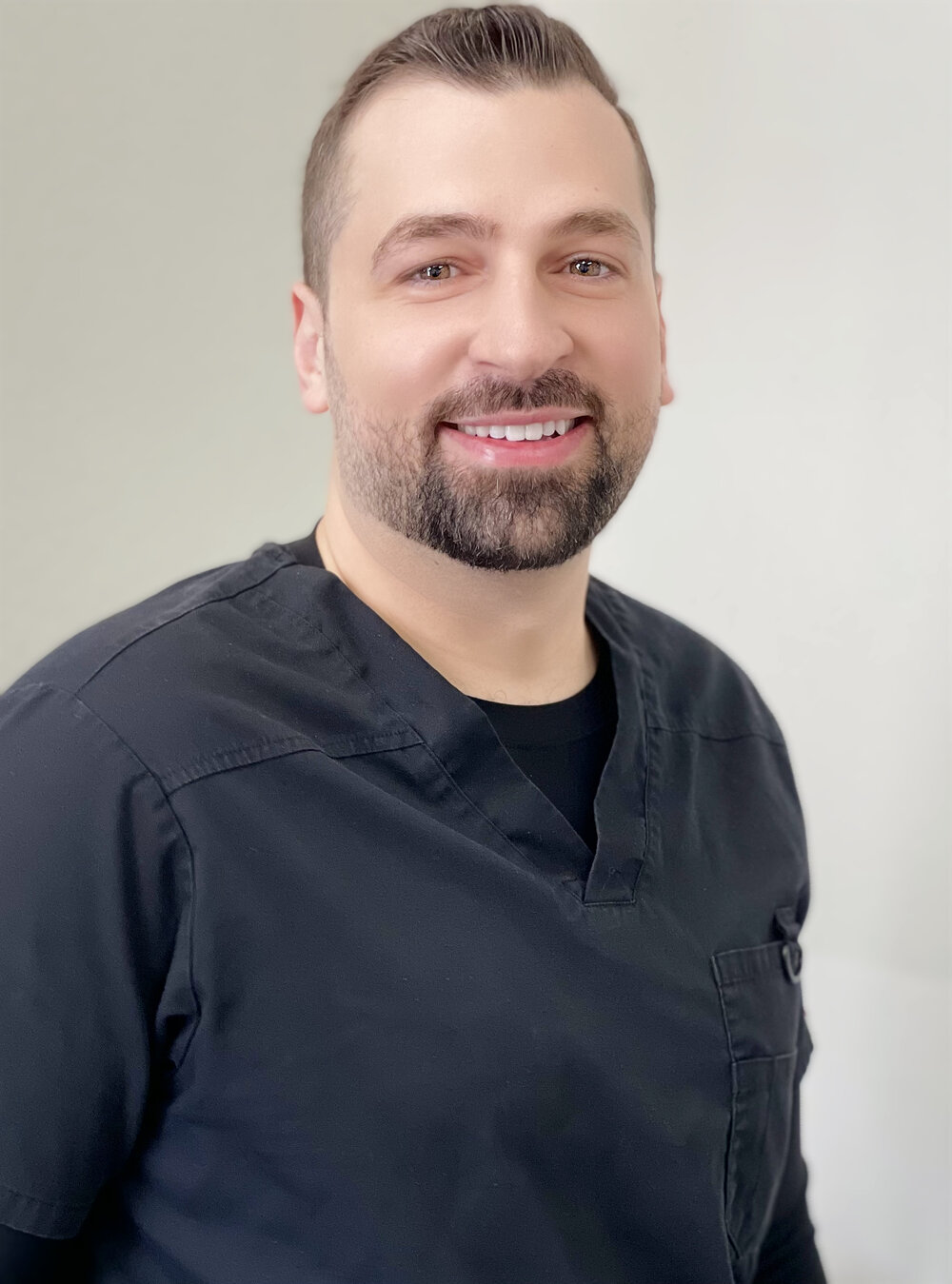
Dr. Alexander Moqattash of Finesse Dental
Dr. Alexander MoqattashDDS · New York University College of Dentistry

What veneers change

Several things
at once.

This is the main reason people choose them over a single treatment: one approach addresses color, shape and position together.

Color that will not bleach outDiscoloration that does not respond to whitening — gray banding, deep intrinsic stain, or a tooth that darkened after injury.
Worn, chipped or uneven edgesFront teeth that have shortened or chipped over years of use can be rebuilt to an even line.
Teeth that look too small or narrowProportion and width can be adjusted so the teeth suit your lip line and face rather than each other alone.
Mild crowding or rotationVeneers can make modestly misaligned teeth appear straight. For anything more than mild, straightening first is usually the better route.
Gaps between front teethSpacing can be closed in porcelain, though for a single small gap bonding is often the more conservative fix.
Old front-tooth work that showsComposite fillings that have stained at the margins, or a mismatched old crown alongside natural teeth.

Not sure whether you need one veneer or several? That is a judgment about symmetry, not just the tooth that bothers you — and it changes the cost considerably. It is one of the first things we work out together.

Options & suitability

When something else
serves you better.

Veneers are not always the right answer, and we would rather tell you that at a consultation than halfway through treatment.

If the issue is only color, whitening is less invasive and keeps your enamel. Start there.

If it is one chipped corner or a small gap, bonding often handles it in a single visit, removes little or no tooth structure, and costs less.

If the teeth are genuinely crooked, straightening them first often means fewer veneers afterwards — or none at all.

If your gums or bite need attention, that comes first. Porcelain placed over an untreated problem does not last.

All cosmetic options

Honest limitations

  • Preparation is irreversible — the teeth stay restored from then on.
  • Porcelain resists staining well, but the natural teeth beside it still age.
  • Veneers can chip or debond, particularly if you grind your teeth.
  • They are not a fix for gum disease, decay or an unstable bite.
  • Matching one veneer to natural neighbors is harder than doing several.

What to expect

Several visits,
spread over weeks.

  1. Consultation and planning

    We look at your teeth, gums and bite, talk through what bothers you, and take a digital scan. You will see the proposal and get the cost in writing before anything is prepared.

  2. Shade and design

    Shade is chosen against your skin and lip line, and checked in daylight rather than office lighting alone. Proportion is planned so the result suits your face.

  3. Preparation and temporaries

    The teeth are prepared and scanned, and temporary veneers are placed while the porcelain is made. You live with the shape for a while, which is useful.

  4. Fitting

    The porcelain is tried in, checked against your face and your bite, adjusted where needed, then bonded. We review it afterwards.

Book a Veneer Consultation

Before you book

Veneer questions,
answered honestly.

How much do porcelain veneers cost?

It depends almost entirely on how many teeth are involved, and that is usually decided by symmetry rather than by the one tooth bothering you. A single veneer and a full front row are very different numbers. You get the cost in writing before treatment begins — call (909) 852-6787 to start that conversation.

Veneers vs bonding — which should I choose?

Bonding is less invasive, usually quicker, and costs less; it suits chips, small gaps and minor reshaping. Veneers cover more ground — color, shape and apparent alignment at once — and porcelain resists staining better over time. If bonding would get you most of the way there, we will tell you.

Will they look fake?

That comes down to planning rather than materials. Shade, proportion, surface texture and the way the edges meet your lip line all matter. Work planned against your own features reads as your smile. Work planned against a shade guide alone is what people picture when they say “fake”.

Can I have just one veneer?

Yes, and it is a common request. Matching a single porcelain veneer to the natural tooth next to it is the harder piece of work, so it takes careful shade planning. We will be honest at the consultation about how close a match is achievable.

How long do veneers last?

There is no fixed lifespan and anyone quoting one is guessing. It depends on your bite, whether you grind, your gum health and how you look after them. They can chip or come loose and may need replacing at some point. We will talk about what affects longevity in your case.

Do veneers stain?

Porcelain resists staining better than natural enamel or composite. But your natural teeth around them continue to age and stain, which is one reason we think about whitening before the shade is locked in.

Will whitening lighten my veneers later?

No. Porcelain does not bleach. That is why the shade decision matters up front — whitening afterwards can leave your natural teeth lighter than the veneers.

I grind my teeth. Does that rule veneers out?

Not automatically, but it does change the conversation. Grinding puts porcelain at higher risk of chipping, and it needs addressing as part of the plan rather than ignored. Tell us at the consultation.

Cost & payment

What do
veneers cost?

Mostly a question of how many teeth are involved, which is a design decision as much as a clinical one. We will work that out with you, then put the cost in writing before anything starts.

Cosmetic treatment is elective, so most dental plans do not cover it. We will tell you which parts of a plan might qualify rather than assuming either way, and CareCredit is available if you would rather spread the cost.

Payment & CareCredit information

Before you commit

  • Full cost in writing before any tooth is prepared.
  • You see the digital plan before agreeing to treatment.
  • Staged plans are possible — you decide the pace.
  • CareCredit available for larger cosmetic plans.
Ask About Cost

See the plan before you commit to it.

Finesse Dental · 8906 San Bernardino Rd, Suite 130
Rancho Cucamonga, CA 91730
Get directions