
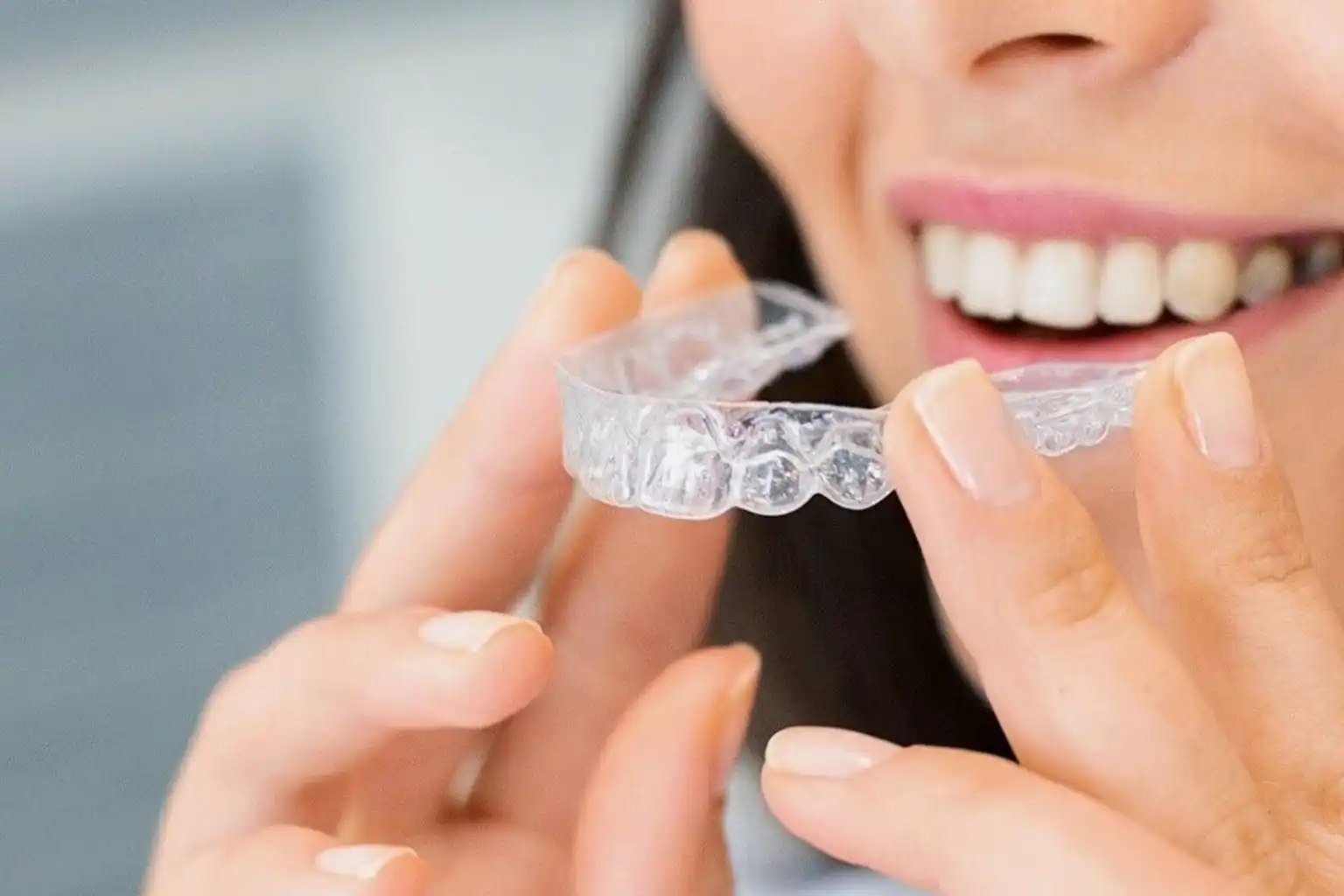
An adult holding a clear aligner tray before starting Invisalign treatment

Finesse Dental · Rancho Cucamonga

Invisalign in Rancho Cucamonga

Straighter teeth,
without the metal.

Clear aligners you take out to eat, brush and photograph. Treatment is planned from a digital scan, so you see the projected movement on screen before you start. Adults are our most common aligner patients — it is genuinely not just for teenagers.

  • iTero scan, no putty trays
  • Removable for meals and cleaning

Wondering whether your case suits aligners at all? That is the first thing we check.

Rancho Cucamonga, Alta Loma, Upland and Ontario · caring for RC since 2004

One dentist, start to finishDr. Moqattash plans and reviews your treatment
iTero digital scanningA scan in minutes instead of putty impressions
An Invisalign provider practiceAnd honest when aligners are the wrong tool
Costs in writing firstCareCredit available

The honest first question

Will aligners actually
work for your teeth?

Clear aligners handle a lot of cases well — crowding, spacing, and teeth that have drifted back after braces years ago. They are less predictable for some bite problems, significant rotations and certain tooth movements, where fixed braces or a referral to an orthodontic specialist is the better answer. A scan and an examination tell us which camp your case falls into. If aligners are not right for you, you will hear that here rather than three trays in.
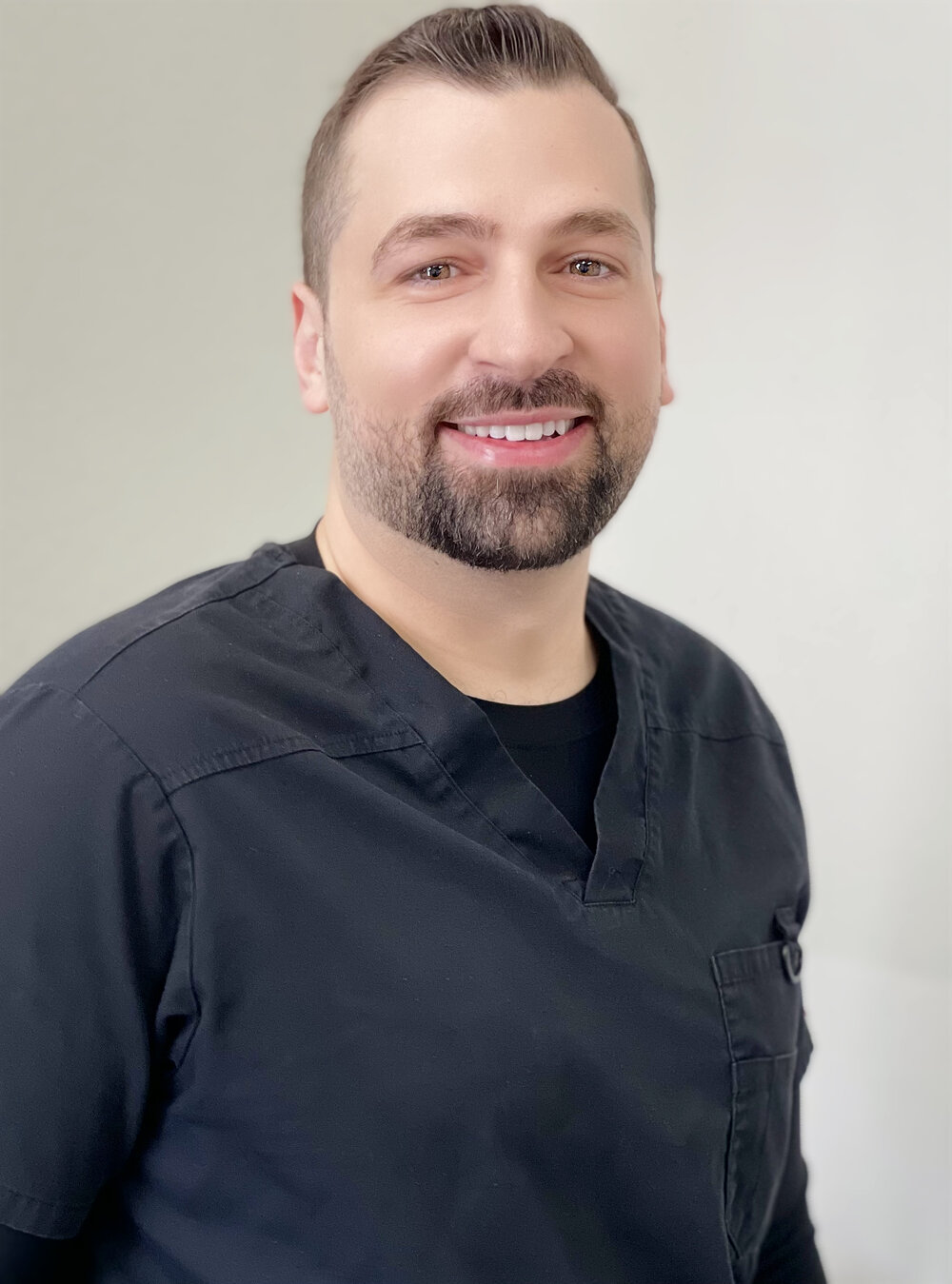
Dr. Alexander Moqattash of Finesse Dental
Dr. Alexander MoqattashDDS · New York University College of Dentistry

What aligners are used for

Common reasons
adults start.

Most people arrive with one of these, and often they have been thinking about it for years.

Crowded or crooked teethCrooked teeth that sit on top of one another are harder to clean properly, which matters beyond appearance.
Gaps and spacingSpaces between teeth can be closed or redistributed, depending on why they are there.
Teeth that shifted after bracesExtremely common. Teeth move throughout life, especially if a retainer stopped being worn.
Front teeth that no longer line upThe one or two teeth that have rotated or tipped forward and now catch your eye in every photo.
Wear from teeth meeting unevenlyWhen teeth do not meet evenly, some take more load than others. Alignment is sometimes part of the answer.
Straightening before cosmetic workAligning first can mean fewer veneers afterwards, or none. Worth asking about before committing to porcelain.

Not sure if your case is simple or complicated? You should not have to guess — and a scan answers it quickly. Book a consultation and we will walk through what is realistic.

Options & suitability

What the scan
does and does not do.

An iTero scan builds a digital model of your teeth in minutes, without putty trays. From that we can show you the planned movement on screen.

It is worth being clear about what that projection is: a plan, not a promise. It shows the movement the treatment is designed to achieve. Real teeth move through bone at their own pace, and how closely the outcome matches depends heavily on how consistently the aligners are worn.

That last part matters more than anything else in aligner treatment. The trays only work while they are in. If they spend the day in a pocket, treatment stalls — and that is the single most common reason cases run long.

All cosmetic options

Worth knowing before you start

  • Aligners must be worn for most of the day to work — this is the main variable.
  • Some cases suit fixed braces or a specialist referral better.
  • Small tooth-colored attachments are often bonded on to help teeth move.
  • Retainers are needed afterwards, or teeth drift back. This is not optional.
  • Gum health and any decay are treated before aligner treatment starts.

What to expect

A consultation,
then regular reviews.

  1. Consultation and scan

    We examine your teeth, gums and bite, then take an iTero scan. This tells us whether aligners suit your case before anyone commits to anything.

  2. Your plan, and the cost

    We walk through the proposed movement on screen, explain what is realistic, and give you the cost in writing. You take it away and think about it.

  3. Aligners and attachments

    Your trays are made. Attachments are usually bonded to some teeth to help specific movements. You change trays on the schedule we agree.

  4. Reviews as you go

    Periodic checks to confirm teeth are tracking as planned and to adjust if they are not. How many depends on your case, not a fixed package.

  5. Retainers

    Once the teeth are where you want them, retainers hold them there. Without them, teeth drift back — which is how many adults end up needing treatment twice.

Book an Aligner Consultation

Before you book

Aligner questions,
answered straight.

How much does Invisalign cost?

It depends on how much movement your case needs and how long treatment runs. A minor correction and a complex case are not comparable. You get the figure in writing after the scan, before you commit — call (909) 852-6787 or book a consultation to get a real number rather than a range off a web page.

How long does treatment take?

It varies with the complexity of the case and, honestly, with how consistently you wear the trays. We will give you an expected timeframe after the scan rather than before it. Treatment that runs long is usually a wear-time issue, not a materials issue.

Does it hurt?

Most people describe pressure or tenderness for a day or two after changing to a new tray, easing as teeth adjust. It is not usually described as painful, but it is noticeable, and it tends to be most obvious at the start.

Will people be able to tell I am wearing them?

They are clear and considerably less obvious than fixed braces, but they are not invisible — and the attachments bonded to your teeth can be visible at close range. We would rather you knew that now than felt misled later.

Am I too old for this?

No. Adults are our most common aligner patients. Teeth keep moving throughout life, so plenty of people who had braces as teenagers find themselves back with crowding decades later. Healthy gums and bone matter far more than your age.

My teeth shifted after braces. Can aligners fix that again?

Often, yes — relapse after braces is one of the most common reasons adults start aligner treatment. The important part is the retainer afterwards, because the same thing will happen again without one.

Can I eat and drink normally?

You take the aligners out to eat and to drink anything other than water, then brush before putting them back in. Most people find that the adjustment rather than the treatment itself.

What if aligners are not suitable for me?

Then we will say so at the consultation and explain why. Depending on what you need, that might mean fixed braces or a referral to an orthodontic specialist. An honest no at the start is worth more than a treatment that will not get you there.

Cost & payment

What does
Invisalign cost?

It comes down to how much movement is involved, which the scan tells us. We will not quote a number before seeing your teeth, because it would not mean anything.

Cosmetic treatment is elective, so most dental plans do not cover it. We will tell you which parts of a plan might qualify rather than assuming either way, and CareCredit is available if you would rather spread the cost.

Payment & CareCredit information

How the cost works

  • Cost given in writing after the scan, before you commit.
  • Priced on your case, not on a package tier.
  • Retainers afterwards are part of the conversation, not a surprise later.
  • CareCredit available if you would rather spread it.
Ask About Cost

Find out whether aligners suit your case.

Finesse Dental · 8906 San Bernardino Rd, Suite 130
Rancho Cucamonga, CA 91730
Get directions