
Finesse Dental · Rancho Cucamonga
Root canal treatment in Rancho Cucamonga
Save the tooth.
End the pain it’s causing.
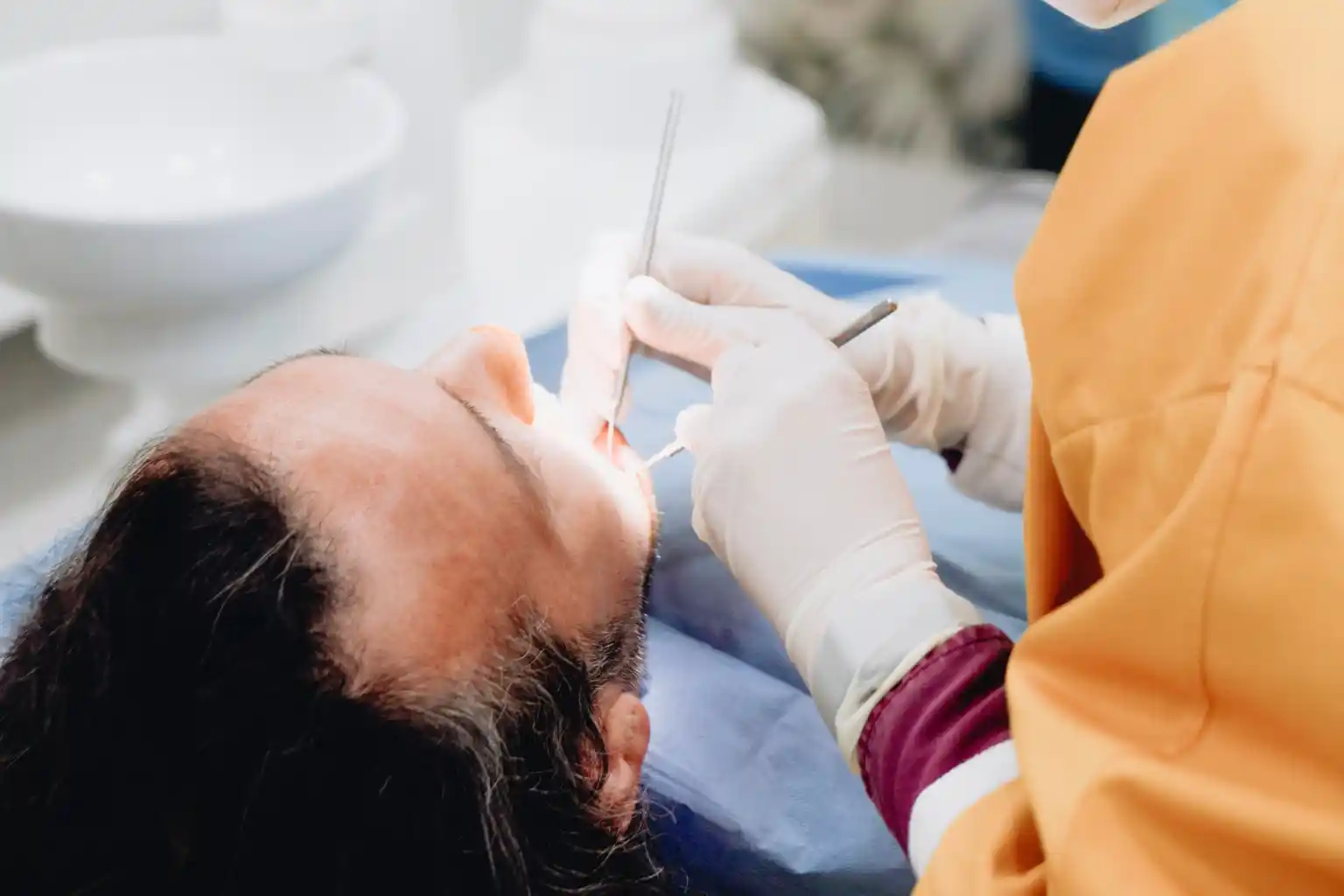
When infection reaches the nerve inside a tooth, root canal treatment clears it out and keeps the tooth you already have. It has a worse reputation than it deserves — it is done under anesthetic, and most people describe the appointment as relief rather than pain.
- 3D imaging of the roots before we start
- Assessment first — symptoms alone don’t diagnose
Tooth nerve pain right now? Call and tell us what’s happening — we’ll talk through the next step.
Rancho Cucamonga, Alta Loma, Upland and Ontario · caring for RC since 2004
The question everyone asks
Do I actually
need a root canal?
Honestly, symptoms alone cannot answer that. Lingering sensitivity to heat, pain when biting, a tooth that aches at night, swelling or a darkening tooth can all point toward the nerve — but so can a cracked filling, gum problems or a tooth that is simply bruised. What settles it is an examination and imaging. If the tooth does not need treatment, you will hear that, and if something simpler would fix it we will tell you that too.
What brings people in
Signs worth
getting looked at.
None of these prove you need root canal treatment. All of them are worth an assessment.
Swelling that affects your breathing or swallowing, or that is spreading to your eye or neck, is a medical emergency — go to an emergency room or call 911. For dental pain and localized swelling, call us or see the emergency dental page.
Options & suitability
Save the tooth,
or take it out?
This is the real decision, and it deserves more than a default answer.
Keeping your own tooth is usually worth it. Natural teeth hold their position, keep the bone around them working, and need no replacement. Root canal treatment exists to make that possible when the nerve is beyond saving.
Sometimes extraction is the better call. If the tooth is fractured below the gum, if too little tooth structure remains to restore, or if the supporting bone is badly affected, treating it may not give you a tooth that lasts. We would rather say that than treat something twice.
If a tooth does come out, replacing it is a separate conversation — see implants and tooth replacement.
All general dentistryWorth understanding
- A treated tooth usually needs a crown afterwards to protect it.
- Treatment is often carried out over more than one appointment.
- Some cases are better handled by an endodontic specialist — we refer where appropriate.
- A treated tooth can still fail later, though many last for years.
- Antibiotics alone do not resolve an infected nerve.
Related treatments
What often
comes with it.
Root canal treatment rarely stands entirely on its own.
Cost & payment
What does
it cost?
Mostly a question of which tooth, and whether a crown is needed afterwards. We will explain both before treatment starts, so the crown is not a surprise later.
We are a PPO provider for many dental plans and we accept children’s Medicaid. Coverage differs plan by plan, so give the team your details and they will check before you book rather than guessing. Root canal treatment is often covered in part, though that depends entirely on your plan. CareCredit is available if you would rather spread a larger treatment plan.
Payment & CareCredit informationNo surprises
- Costs explained before treatment begins.
- The crown, if one is needed, is priced separately — ask upfront.
- Many PPO plans accepted; coverage checked before you book.
- CareCredit available for larger plans.
Tell us what’s been happening.
Finesse Dental · 8906 San Bernardino Rd, Suite 130Rancho Cucamonga, CA 91730Get directions